A production line that stops because of a failed motor starter, overheated panel, or damaged feeder is rarely a simple repair call. It can mean missed shipping deadlines, overtime labor, spoiled materials, and a safety concern that needs immediate attention. Professional industrial electrical maintenance services give facility managers a better way to manage those risks: find developing problems early, correct them properly, and keep critical systems ready for daily demand.
For warehouses, manufacturing plants, distribution centers, and other industrial properties across the Dallas-Fort Worth area, maintenance is not just about keeping the lights on. It protects people, equipment, production schedules, and the long-term value of the facility.
Why Industrial Electrical Maintenance Matters
Industrial electrical systems work harder than the systems found in most offices or retail spaces. Heavy machinery, motors, conveyors, welders, process equipment, HVAC units, battery charging areas, and high-bay lighting can place sustained demand on switchgear, panels, transformers, breakers, and wiring.
Over time, heat, vibration, dust, moisture, corrosion, and normal equipment wear can loosen connections or damage components. A small issue inside an electrical enclosure may not be visible from the outside, yet it can create excess heat, nuisance tripping, equipment damage, or arc-flash hazards. Waiting until a failure occurs often turns a manageable repair into an emergency shutdown.
Planned maintenance helps identify concerns while there is still time to schedule repairs around operations. That is especially valuable for facilities where downtime is expensive or where a single electrical failure can affect an entire process.
What Industrial Electrical Maintenance Services Include
The right maintenance scope depends on the facility, the age and condition of its electrical infrastructure, equipment load, operating hours, and safety requirements. A warehouse with LED lighting and a few loading dock systems needs a different plan than a manufacturing site with large motors and multiple distribution panels.
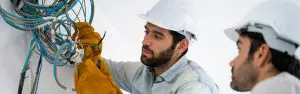
A professional maintenance visit often begins with a visual inspection of electrical rooms, panels, disconnects, feeders, grounding components, and equipment connections. The electrician looks for warning signs such as discoloration, corrosion, damaged insulation, missing covers, water intrusion, overloaded circuits, improper labeling, or unauthorized modifications.
Testing is equally important. Depending on the equipment and maintenance plan, this may include checking voltage, load balance, breaker performance, grounding continuity, connection integrity, and signs of excessive heat. Infrared thermal imaging can be particularly useful because it helps identify hot spots that may point to loose terminations, overloaded conductors, failing breakers, or uneven loads without interrupting normal operation.
Maintenance also involves cleaning and servicing equipment where appropriate. Dust and debris inside electrical equipment can hold moisture, reduce airflow, and contribute to overheating. However, cleaning must be performed correctly. Pressurized air or improper methods can push contaminants deeper into equipment or create other hazards. Industrial electrical work should always be handled by qualified professionals using safe procedures.
Maintenance Should Produce Useful Answers
A maintenance visit should not end with a vague statement that everything looks fine. Facility decision-makers need clear findings: what was inspected, what conditions were found, which items require immediate correction, and which upgrades can be planned for a future shutdown.
Good documentation supports budgeting and helps maintenance teams track recurring issues. If a particular breaker trips repeatedly, for example, the answer may be a failing breaker, but it could also be an overloaded circuit, a motor issue, an undersized conductor, or a change in connected equipment. Replacing the breaker without identifying the cause may only delay the next disruption.
The Warning Signs You Should Not Ignore
Electrical failures do not always announce themselves with a complete outage. Many facilities see early symptoms but continue operating because the equipment is still running. That decision can be understandable, especially when production demands are high, but it deserves a prompt professional evaluation.
Common warning signs include breakers that trip repeatedly, flickering or dimming lights, burning odors, buzzing panels, warm outlets or disconnects, damaged cords, frequent motor problems, or equipment that performs inconsistently. Water near electrical gear, rust inside enclosures, and signs of rodent damage also require attention.
Power quality concerns can be more subtle. Sensitive controls, variable frequency drives, computers, and automated systems may react to voltage irregularities that do not affect basic lighting or receptacle circuits. In these cases, troubleshooting may need to look beyond the immediate equipment and evaluate the supply, grounding, load conditions, and panel capacity.
Preventive Maintenance Versus Emergency Repairs
Emergency electrical repairs are sometimes unavoidable. Storm damage, vehicle impacts, failed equipment, and unexpected component defects can happen even in well-maintained facilities. The goal of preventive maintenance is not to promise that every outage can be avoided. It is to reduce preventable failures and make the facility better prepared when a problem does occur.
The trade-off is straightforward. Planned maintenance requires time, access to equipment, and a budget before something breaks. Emergency work may appear easier to postpone, but it usually costs more in lost operations, expedited parts, damaged equipment, and safety exposure.
For some facilities, quarterly inspections of critical equipment make sense. Others may benefit from semiannual or annual service, along with targeted checks after major equipment additions, renovations, storm events, or unusual electrical incidents. The best interval depends on the environment and how heavily the equipment is used. A dusty production area or high-load distribution system generally needs closer attention than a lightly used storage building.
Code Compliance Is Part of Reliability
Code compliance is not merely a box to check during construction. Electrical codes and safety standards help establish safe methods for installation, grounding, overcurrent protection, access, labeling, and equipment use. When a facility expands, adds machinery, changes its layout, or installs new lighting, the existing electrical system may need to be evaluated before the new load is connected.
Industrial sites also benefit from accurate panel schedules and circuit labeling. During a repair or emergency, clear identification helps reduce confusion and allows qualified personnel to isolate the right equipment more safely. Missing labels, unlabeled disconnects, and outdated schedules are common issues that can complicate otherwise routine work.
It is also wise to review whether older panels, breakers, or service equipment have parts that are difficult to source. Replacement planning can be far less disruptive than waiting until an obsolete component fails at the worst possible time.
Maintenance That Supports Energy Efficiency
Electrical maintenance can reveal opportunities to reduce operating costs. Overloaded circuits, inefficient lighting, poorly matched equipment, and aging controls may add unnecessary energy use while also increasing stress on the electrical system.
For example, upgrading outdated warehouse lighting to properly designed LED fixtures can improve visibility, reduce maintenance needs, and lower energy consumption. Adding occupancy sensors or daylight controls may make sense in some areas, but only when they fit the way the space is used. A sensor strategy that works well in a low-traffic storage aisle may be frustrating in an active production zone.
The same practical approach applies to backup power, surge protection, and power distribution upgrades. These improvements should be based on the facility’s actual operations, critical loads, and risk tolerance rather than a one-size-fits-all recommendation.
Choosing an Industrial Electrical Maintenance Partner
Industrial work requires more than basic electrical repair experience. Look for an electrical contractor that can evaluate the full system, communicate findings clearly, follow safe work practices, and coordinate work around operational needs. Responsiveness matters, but so does workmanship. A quick repair that creates a code issue or fails to address the underlying cause is not a reliable solution.
For facilities in Balch Springs, Dallas, Mesquite, Garland, Irving, Arlington, Plano, Fort Worth, and surrounding DFW communities, Gartech Electrical provides professional electrical support focused on safety, code compliance, and dependable long-term performance. Whether the need is scheduled maintenance, troubleshooting, panel upgrades, lighting improvements, or an urgent repair, the right plan begins with a clear assessment of the equipment and the facility’s priorities.
If your facility has recurring electrical issues, aging equipment, or no documented maintenance plan, schedule a professional evaluation before a minor warning sign becomes an expensive interruption. A clear inspection and practical repair plan can help you protect your people, your equipment, and your production schedule.